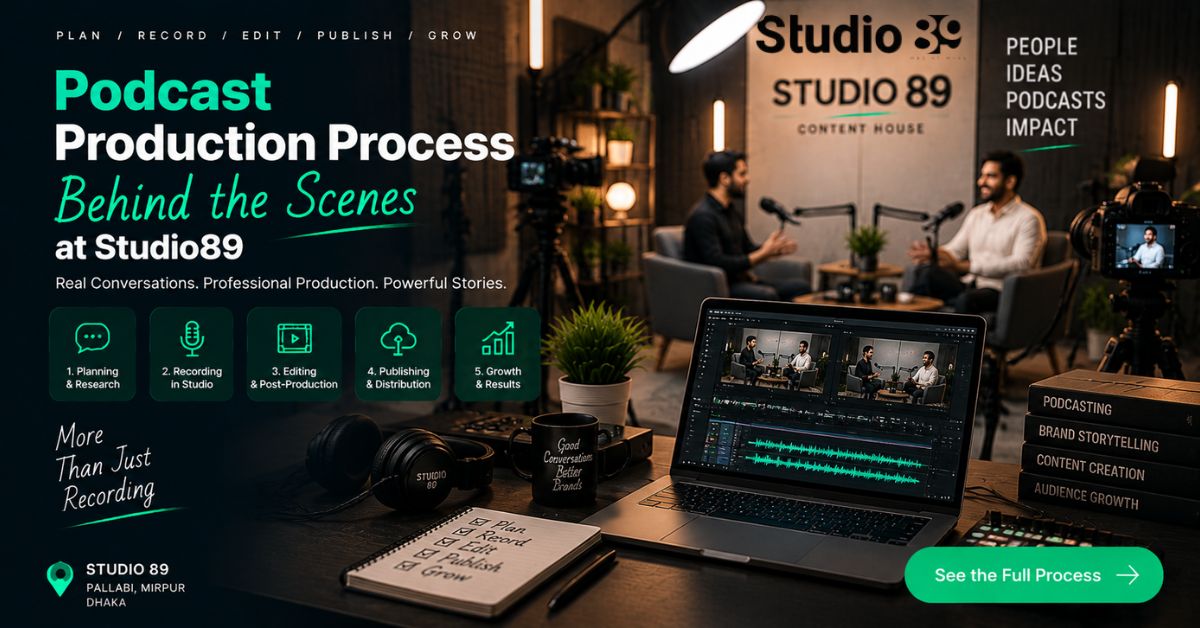
A professional podcast episode begins long before the host says the first word. The podcast production process behind the scenes includes briefing, set preparation, audio testing, camera framing, recording control, file management, editing and platform delivery.
At Studio89 in Dhaka, the public workflow starts with the podcast idea and package selection, then moves into multi-camera recording with professional audio support. This guide explains each verified stage and identifies the details clients should confirm before booking.
The podcast production process behind the scenes has seven core stages: episode planning, studio preparation, technical testing, multi-camera recording, media backup, post-production and platform-ready delivery.
What Is the Podcast Production Process Behind the Scenes?
The podcast production process behind the scenes is the complete workflow podcast production process behind the scenes used to turn a conversation idea into a finished audio-video episode. It covers the work viewers do not normally see: topic preparation, guest coordination, set selection, lighting, microphone placement, camera checks, recording supervision, file organization, editing and export.
Studio89’s published process asks clients to share the topic, guest list, format, recording length and target platform before selecting a 2-camera or 3-camera package and recording inside its Dhaka studio.
A strong process protects three things: message clarity, technical quality and production efficiency.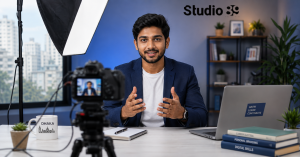
Stage 1: The Episode Brief Comes Before the Studio
The first stage of the podcast production process behind the scenes is not equipment setup. It is deciding what the episode must achieve.
Before the session, the host should confirm:
- Episode topic
- Intended audience
- Guest name and designation
- Main discussion sections
- Recording duration
- Target platforms
- Required full episode and short clips
- Brand pronunciation and on-screen titles
- Sensitive or restricted topics
- Final call to action
A practical episode outline includes an opening, three or four discussion blocks, a summary and a closing CTA. It guides the conversation without making it sound scripted.
Studio89’s public process specifically asks for the podcast idea, guest list, episode format, recording length and target platform. That information affects package choice, camera coverage and deliverables.
Expert Tip
Prepare the clip plan before recording. When the producer knows which questions may generate strong short-form moments, the host can ask cleaner and more focused questions.
Stage 2: Studio, Set and Camera Preparation
The second stage of the podcast production process behind the scenes prepares the visual environment.
A podcast set must support:
- Comfortable host and guest positions
- Natural eye lines
- Space for microphones
- Clean background separation
- Consistent lighting
- Camera and operator access
- Brand elements that do not distract
- Safe placement of cables and stands
Studio89 publicly lists professional Godox lighting, flexible studio setups and 2-camera or 3-camera podcast options. Its wider Professional Studio Rental service also emphasizes controlled acoustics and production-ready space.
A two-camera setup can cover dedicated host and guest views. podcast production process behind the scenes A three-camera setup can add a wider conversation frame or another dedicated angle.
The exact angle plan should be confirmed during booking. Studio89’s current package listing describes the 1-hour tier as a “2 Camera Setup” and lists “2 Camera angles,” although its description also refers to three angles.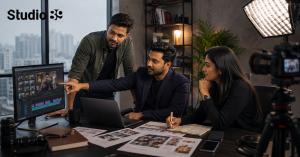
Stage 3: Audio and Lighting Tests
Clear sound carries the entire episode. That makes audio testing one of the most important parts of the podcast production process behind the scenes.
Before recording, the team should check:
- Microphone distance
- Host and guest voice levels
- Clothing or jewellery noise
- Room noise and air-conditioning
- Headphone monitoring
- Backup audio path
- Camera recording status
- Lighting exposure and skin tone
- White balance
- Memory and power availability
Studio89 identifies Rode and DJI audio support and Godox lighting in its current podcast offer. The exact microphone models and recording specifications are not publicly documented, so clients should confirm them when a project requires specific technical standards.
The host and guest should record a short test conversation. Podcast production process behind the scenes Natural speech reveals volume changes and body movement more accurately than a simple microphone tap.
Stage 4: Multi-Camera Podcast Recording
During the podcast production process behind the scenes, the recording team watches both the conversation and the technical system.
The host focuses on the guest. The production team monitors:
- Audio levels
- Camera recording indicators
- Framing and focus
- Guest posture
- Microphone position
- Background activity
- Long pauses or repeated answers
- Moments suitable for clips
- Sections that may require a retake
A professional session should begin with a clear recording start and episode identification. This makes the files easier to organize during editing.
The team should avoid unnecessary interruptions. podcast production process behind the scenes minor pauses can be corrected later. Technical failures, incorrect names or major factual errors should be corrected before the conversation moves on.
What the Client Should Bring
- Final guest name and title
- Approved episode outline
- Correct brand pronunciation
- Product, book or prop when relevant
- Outfit suitable for the background
- Permission for third-party material
- Any required logo or graphic files
- A confirmed CTA
Stage 5: File Handling and Backup
The least visible part of the podcast production process behind the scenes is often the most important after recording: media management.
A multi-camera episode creates separate camera and audio files. podcast production process behind the scenes these assets must be labelled, transferred and matched correctly before editing begins.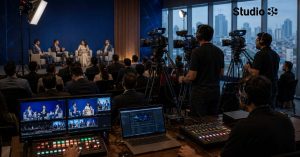
A sensible file structure separates:
- Camera A
- Camera B
- Camera C, where applicable
- Main audio
- Backup audio
- Graphics and logos
- Licensed music
- Episode notes
- Client feedback
- Review exports
- Final exports
Studio89’s public pages do not state the exact backup policy, storage period or raw-file handover process. Clients should confirm those terms before recording, especially for recurring shows or long-form corporate content.
Stage 6: Editing the Full Episode
Post-production turns recorded material into a coherent episode. This is where the podcast production process behind the scenes becomes visible in the final result.
A typical multi-camera edit may include:
- Synchronizing audio and cameras
- Selecting camera angles
- Removing major mistakes or dead sections
- Balancing dialogue levels
- Reducing distracting noise
- Colour correction
- Speaker-name graphics
- Intro and outro placement
- Brand elements
- Captions when included
- Review export
- Final platform export
The best edit does not switch angles constantly. It follows the conversation. A reaction, direct answer or change of speaker should motivate the cut.
Studio89 describes its output as YouTube and Spotify ready, but its public pages do not consistently define revision counts, turnaround, subtitle scope, clip quantity or final export specifications. Confirm them in the written quotation.
Stage 7: Full Episode, Clips and Platform Delivery
The podcast production process behind the scenes should end with an organized content system—not one unidentified video file.
Possible outputs include:
| Output | Main Use |
|---|---|
| Full video episode | YouTube, website and Facebook |
| Audio episode | Spotify and podcast distribution |
| Vertical clips | Reels, Shorts and TikTok |
| Landscape clips | LinkedIn, Facebook and website |
| Square artwork | Podcast cover and social promotion |
| Thumbnail | YouTube click-through support |
| Quote graphics | Social-media follow-up |
| Transcript or show notes | Accessibility, blog and search support |
YouTube treats a podcast as a playlist containing full-length episodes. It recommends keeping supporting clips outside the podcast playlist, using a consistent show name and adding a detailed show description.
When a show is hosted with Spotify for Creators, an RSS feed is created after the first episode is published. Distribution to additional listening platforms requires the feed to be enabled and submitted; Spotify does not automatically submit the show everywhere.
Studio89 describes its podcast direction as YouTube and Spotify ready. The client should confirm whether “ready” means exported files only or also includes uploading, metadata, RSS setup, thumbnails and channel management.
Studio89 Podcast Packages in Dhaka
The podcast production process behind the scenes changes with recording time and camera coverage.
| Package | Published Scope | Current Price |
|---|---|---|
| 1 Hour, 2-Camera Setup | One-hour recording, 2-camera setup, professional audio and studio setup | Tk 6,500 |
| 1 Hour, 3-Camera Setup | One-hour recording, 3-camera setup, professional audio and multi-angle video | Tk 10,500 |
| 2 Hours, 3-Camera Setup | Long-form recording with professional studio and audio-video support | Tk 15,000 |
| Custom Production | Branded, recurring, bulk or custom-format podcast | Custom quotation |
These are current published prices and may change. Editing, clips, subtitles, raw footage, thumbnails, uploading and turnaround should be confirmed in the written scope.
Professional Studio Rental or Complete Podcast Production?
| Requirement | Professional Studio Rental | Complete Podcast Production |
|---|---|---|
| Studio space | Included | Included |
| Lighting and controlled environment | Available | Planned for the episode |
| Client brings crew | Usually suitable | Not necessarily required |
| Camera and audio operation | Confirm separately | Included according to scope |
| Editing | Usually separate | Confirm package inclusion |
| Platform-ready files | Not automatic | Part of the stated direction |
| Best for | Experienced production teams | Hosts and brands needing support |
Professional Studio Rental currently starts at Tk 3,000 per hour and is useful when the client already has a crew, equipment plan and editor. The complete package is the stronger option when Studio89 needs to manage the recording workflow.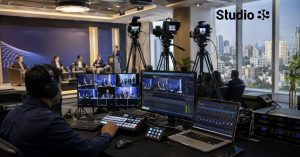
Common Production Problems and How to Prevent Them
A disciplined podcast production process behind the scenes prevents avoidable problems.
Poor Audio
Keep microphone distance consistent. Remove noisy accessories. Test normal conversation before recording.
Weak Guest Preparation
Send the topic, approximate structure, location and arrival time in advance. Do not surprise the guest with sensitive questions.
No Clip Plan
Identify strong questions before the session. Encourage complete answers instead of repeatedly interrupting the guest.
Unclear Deliverables
Confirm the number of cameras, recording duration, full-episode edit, short clips, captions, revisions, raw files and deadline in writing.
Mixed Platform Strategy
Plan full episodes and short clips separately. Do not treat one horizontal export as a complete multi-platform system.
Why This Behind-the-Scenes Feature Builds Trust
A genuine podcast production process behind the scenes article should show original evidence from a real Studio89 session.
Google’s people-first content guidance asks whether content provides original information and clearly demonstrates first-hand expertise. It also recommends explaining who created the content, how it was produced and why it exists. No specific article format guarantees rankings, but original process evidence makes the page more useful and trustworthy.
For stronger E-E-A-T, publish this article with:
- Named producer, DOP, audio engineer or editor
- Real recording date
- Original studio photographs
- Camera and microphone setup images
- Sound-check photograph
- Editing-timeline image
- Final episode embed
- Honest explanation of problems solved
- Author byline and reviewer details
Do not use stock images as the main evidence. Original production material is the central value of this feature.
Podcast Production Process Behind the Scenes: Final Recommendation
The podcast production process behind the scenes works best when planning, recording and post-production operate as one connected system.
Start with the episode objective. Confirm the deliverables. Test every technical element. Record with clear crew roles. Protect the files. Edit for the conversation. Then organize the full episode, clips and platform assets.
Studio89’s current public offer supports this workflow with professional audio, multi-camera options, Godox lighting and podcast packages starting at Tk 6,500 in Dhaka.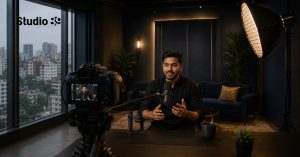
FAQ Section
Actual Google People Also Ask results can vary by location, device and search history.
How Is a Professional Podcast Episode Produced?
A professional episode follows a structured podcast production process behind the scenes: brief the topic and guest, prepare the set, test cameras and microphones, record and monitor the conversation, back up the files, edit the full episode and export platform-specific versions.
What Happens Before a Podcast Recording?
The team confirms the topic, guest, episode duration, platform, camera package, visual setup and deliverables. The host prepares questions while the studio prepares lighting, audio and framing.
How Long Does Podcast Production Take?
Recording may take one or two hours under Studio89’s current packages. Total production time also depends on setup, editing, revisions, clips, subtitles and client feedback. Studio89 does not currently publish one universal delivery SLA for every podcast package.
What Equipment Does Studio89 Use?
Studio89 publicly identifies Rode and DJI audio support, Godox lighting and 2-camera or 3-camera options. Exact camera bodies, microphone models, codecs and audio settings should be confirmed when a project requires specific technical standards.
How Much Does Podcast Production Cost in Dhaka?
Studio89 currently lists Tk 6,500 for a one-hour 2-camera session, Tk 10,500 for a one-hour 3-camera session and Tk 15,000 for a two-hour 3-camera session. Confirm the latest scope before booking.
Is Editing Included in Podcast Production?
Studio89 describes platform-ready production direction, but the precise editing, revision, subtitle, clip and turnaround scope is not consistently detailed across its public pages. Request a written deliverables list before payment.
Can One Episode Create Reels and Shorts?
Yes. One planned episode can produce full-length video, audio, vertical clips, landscape excerpts, quote graphics and show notes. The clip count and formats should be agreed before recording.
Should Podcast Clips Be Added to the YouTube Podcast Playlist?
No. YouTube recommends keeping only full-length episodes in the podcast playlist and publishing supporting clips separately.
Is Professional Studio Rental Enough for a Podcast?
It is enough when you already have a trained camera crew, audio operator, episode plan and editor. A complete podcast package is more suitable when you need the studio team to manage recording and production support.
About Studio 89
Studio89 is Dhaka’s First-Ever Content House, offering professional studio rental, podcast production, product photography and videography, online video commercial production, personal branding, video resume solutions, and 360° marketing services. Based in Dhaka, Bangladesh, Studio89 helps brands, CEOs, founders, creators, e-commerce businesses, and professionals create strategy-led content for digital platforms.
